✏️ Alphabet Tracing Worksheet
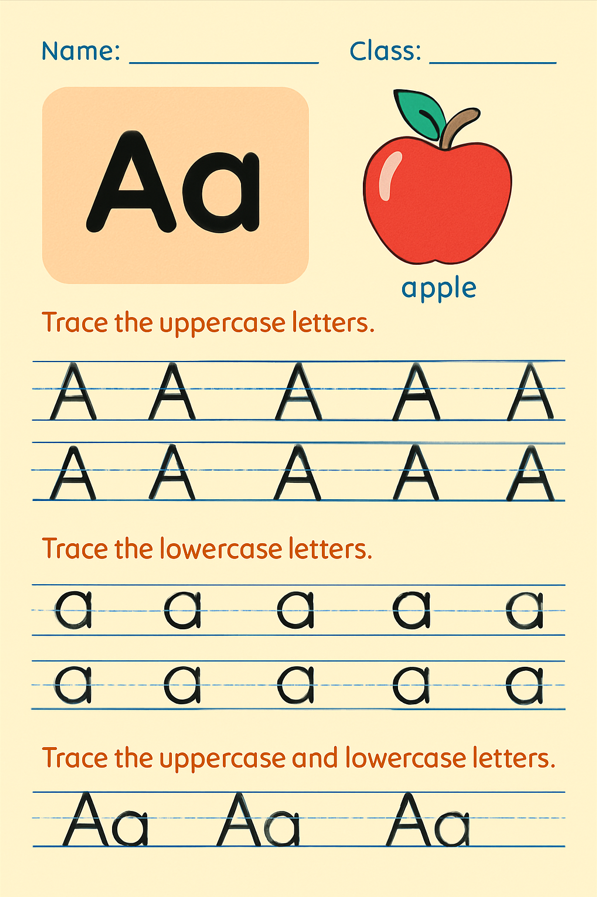
| 🎯 Learning Objective | Practice forming uppercase letters correctly, building the fine motor control and letter shape memory needed for handwriting |
| 📊 Difficulty | Beginner — no prior tracing experience needed |
| 👶 Best For | Ages 3–5, preschool and pre-kindergarten |
| ⏱️ Estimated Time | 5–10 minutes per session (a few letters at a time, not the whole sheet at once) |
| 🖊️ Materials Needed | Printed worksheet, pencil or crayon |
👩🏫 Teacher Instructions
In the Classroom
Introduce one or two letters at a time rather than assigning the full sheet in one sitting — young hands tire quickly, and quality of formation matters more than quantity completed. Model the correct starting point and stroke direction for each letter before children begin (most uppercase letters start at the top). Circulate to check pencil grip and letter formation rather than just checking for a completed page.
👨👩👧 Parent Instructions
At Home
Keep sessions short — 5 minutes of focused tracing beats 20 minutes of a tired, resistant child. Say the letter name and sound out loud as your child traces it, connecting the visual practice to the sound work in our phonics guide. It's fine if lines wobble outside the guide at first; smoothness comes with repetition, not a single perfect attempt.
✅ What Successful Completion Looks Like
Not a Traditional "Answer Key"
Since this is a handwriting practice sheet rather than a question-and-answer worksheet, there's no single "correct answer" to check. Instead, look for: strokes that generally follow the dotted guide, letters that stay roughly within the line, and consistent starting points across repetitions of the same letter. Perfect precision isn't the goal at this stage — consistent, comfortable pencil control is.