🔊 Letter Sounds Worksheet
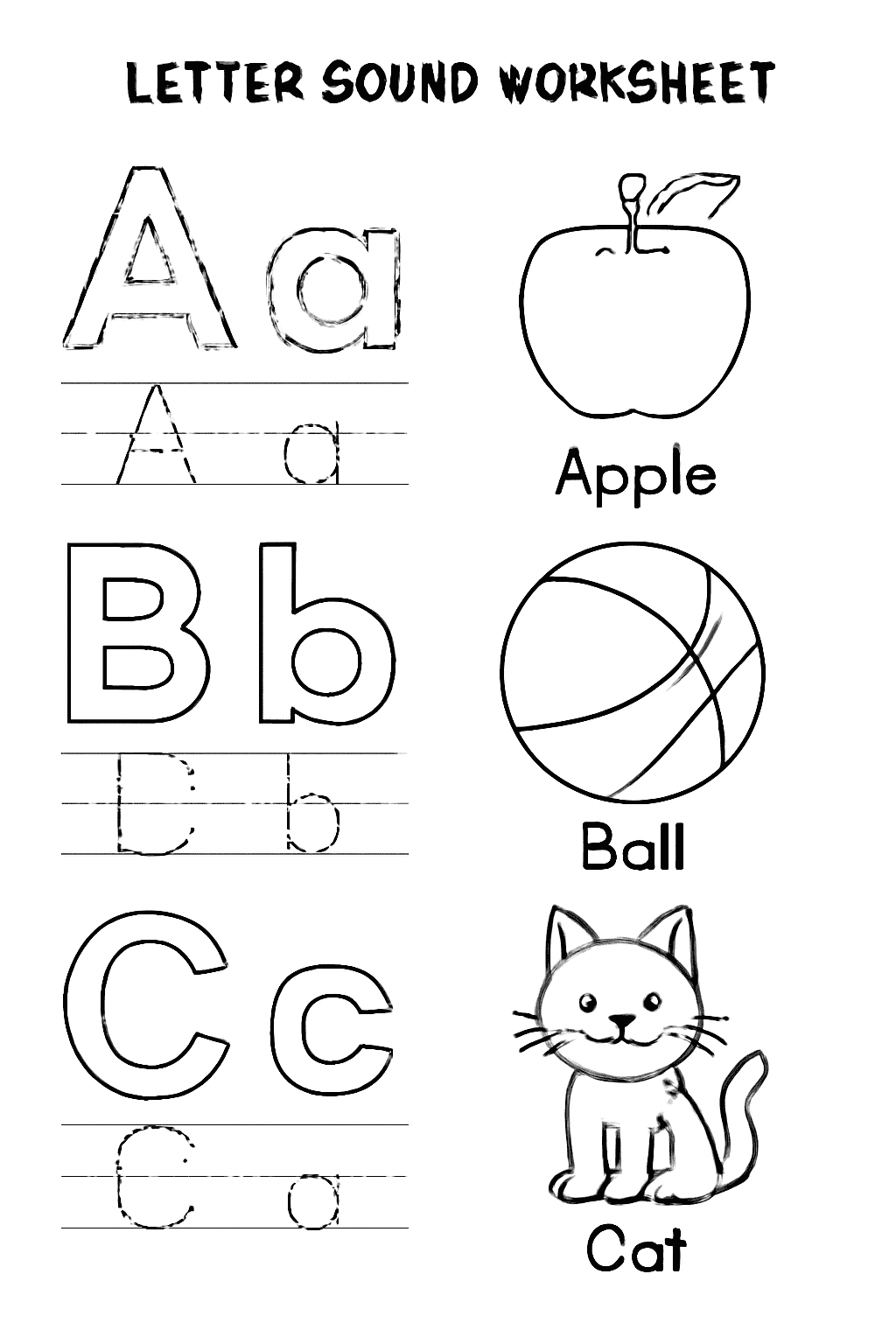
| 🎯 Learning Objective | Connect each letter to the sound it makes, the foundational skill behind decoding words |
| 📊 Difficulty | Beginner — best after some letter name recognition is already in place |
| 👶 Best For | Ages 4–6, pre-kindergarten and kindergarten |
| ⏱️ Estimated Time | 10–15 minutes, a handful of letters at a time |
| 🖊️ Materials Needed | Printed worksheet, pencil or crayon |
👩🏫 Teacher Instructions
In the Classroom
Say each letter's sound out loud before students attempt it themselves — hearing the sound modeled correctly matters more at this stage than any written instruction. Group letters with visually or acoustically similar sounds (like "m" and "n") in separate sessions rather than back to back, since the similarity can cause more confusion than clarity when introduced together. Watch specifically for students who know the letter name but not its sound, or vice versa — these are different skills and both need direct attention.
👨👩👧 Parent Instructions
At Home
Exaggerate the sound slightly when saying it together ("mmm" for M, holding the sound) — this makes it easier for a child to isolate and repeat than a quick, natural pronunciation. Pair this worksheet with our phonics guide for parents for the fuller sequence this fits into. If a child mixes up similar sounds, that's a normal part of the process, not a sign of a problem — repetition across several sessions typically resolves it.
✅ What Successful Completion Looks Like
Not a Traditional "Answer Key"
Since letter-sound worksheets vary by exact format, there's no single universal answer key here. Instead, check for: the child correctly producing the sound (not just the letter name) when shown each letter, and correctly identifying which letter matches a sound spoken aloud. Confidence and consistency across a few repeated sessions matter more than a single perfect pass through the sheet.