🦋 Symmetry Worksheet
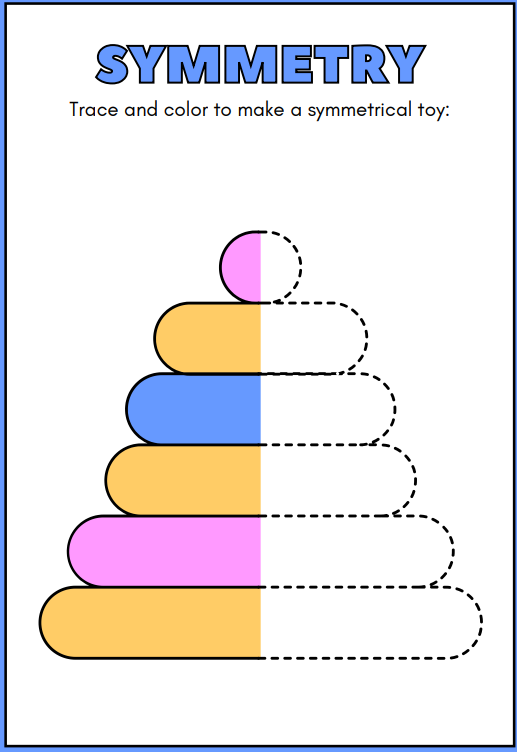
| 🎯 Learning Objective | Recognize symmetrical patterns and complete the missing half of a picture — a visual-spatial reasoning skill distinct from shape or letter recognition |
| 📊 Difficulty | Intermediate — requires comparing two sides of a picture carefully, which takes more sustained attention than simple coloring |
| 👶 Best For | Ages 5–7, kindergarten through first grade |
| ⏱️ Estimated Time | 15 minutes |
| 🖊️ Materials Needed | Printed worksheet, pencil or crayon, an optional small mirror for checking work |
👩🏫 Teacher Instructions
In the Classroom
Introduce the idea concretely before the worksheet: fold a piece of paper in half, paint a shape on one side, press it closed, and open it to reveal a mirrored, symmetrical shape. This hands-on demonstration makes the abstract idea of "the same on both sides" much easier to apply on paper afterward. For the worksheet itself, encourage students to look at one detail at a time (one wing, one petal) rather than trying to complete the whole picture in a single glance.
👨👩👧 Parent Instructions
At Home
A small handheld mirror is a genuinely useful tool here — placed along the worksheet's center line, it shows your child exactly what the completed, symmetrical picture should look like, turning an abstract instruction into something they can see directly. This kind of spatial reasoning connects to the shape recognition work in our shapes worksheet, since both rely on carefully comparing visual features.
✅ Answer Key
How to Check
A correctly completed symmetry worksheet should show the missing half as a mirror image of the given half — matching size, shape, and position point for point across the center line, not just "roughly similar." The mirror trick is the easiest way to verify a specific answer: hold a small mirror upright along the worksheet's center line over the completed half, and it should visually recreate the original given half. If it doesn't match, that's usually a sign the child copied the general shape without checking exact placement — worth doing one more practice round together, pointing at matching details on each side before drawing.