🔺 Shapes Activity Worksheet
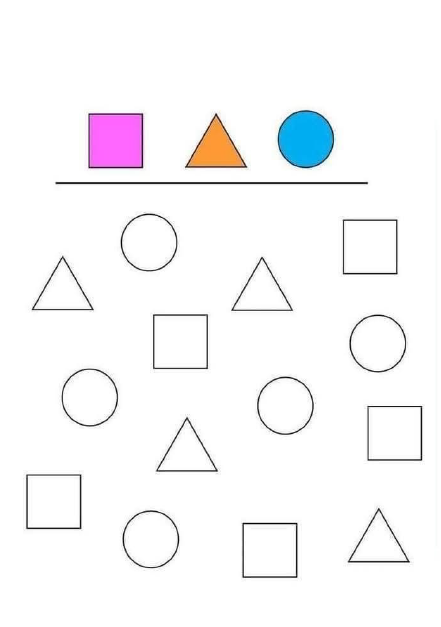
| 🎯 Learning Objective | Recognize and identify basic 2D shapes by their defining features (number of sides and corners), not just by memorized appearance |
| 📊 Difficulty | Beginner — best after some casual exposure to shape names |
| 👶 Best For | Ages 3–5, preschool and pre-kindergarten |
| ⏱️ Estimated Time | 10–15 minutes |
| 🖊️ Materials Needed | Printed worksheet, pencil or crayon |
👩🏫 Teacher Instructions
In the Classroom
Before starting, hold up physical shape cutouts or classroom objects (a book for a rectangle, a clock for a circle) and have children name them out loud — this activates real recognition before the worksheet asks for it on paper. As children work, ask "how do you know that's a triangle?" rather than just checking the answer, to build the habit of identifying shapes by features (three sides, three corners) instead of by color or size, which can otherwise become a false shortcut.
👨👩👧 Parent Instructions
At Home
Go on a quick "shape hunt" around the room before sitting down with the worksheet — a plate is a circle, a door is a rectangle, a slice of pizza might look like a triangle. This kind of real-world connection tends to make the worksheet feel like confirming something already known, rather than learning something brand new from scratch. Our shapes learning pages have more detail on each shape's specific features if your child wants to go deeper.
✅ Answer Key
What to Check
Check that each shape is identified by its actual geometric features, not by surface appearance alone — a square and a rectangle can look similar to a young child, but a square specifically has four equal sides, which is the detail worth double-checking if answers seem inconsistent. If your child mixes up two similarly-shaped figures, that's a very common and normal mix-up at this age, not a sign of a bigger problem — a quick side-by-side comparison of the two shapes usually clears it up.