🦋 Symmetry Tracing and Coloring Worksheet
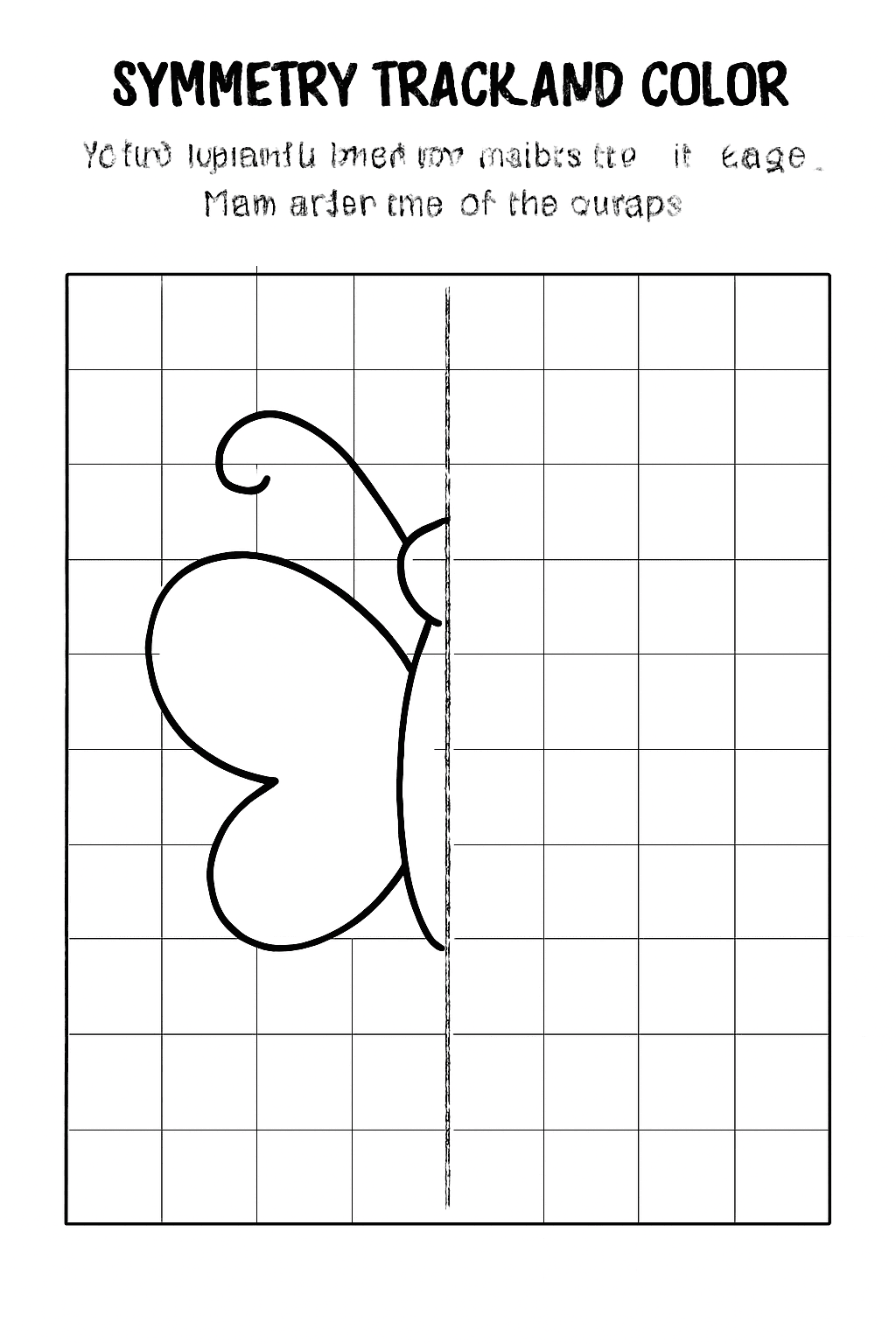
| 🎯 Learning Objective | Trace a symmetrical outline and color it, reinforcing visual-spatial awareness through motor practice rather than problem-solving |
| 📊 Difficulty | Beginner — no prior symmetry knowledge required |
| 👶 Best For | Ages 5–7, kindergarten and grade 1 |
| ⏱️ Estimated Time | 10–15 minutes |
| 🖊️ Materials Needed | Printed worksheet, pencil, crayons or colored pencils |
👩🏫 Teacher Instructions
In the Classroom
This worksheet is a gentler entry point than our symmetry practice worksheet, which asks students to complete a missing mirror half from scratch — a genuine problem-solving task. Here, students trace a symmetrical shape that's already fully drawn, which builds visual familiarity with symmetrical forms before asking them to construct one independently. Use this one first with students who find the completion version frustrating.
👨👩👧 Parent Instructions
At Home
Point out the matching halves as your child traces and colors — "look, this side matches that side" — to build the underlying concept in a low-pressure way before moving to the more challenging mirror-completion worksheet. Coloring both halves in matching colors, rather than randomly, is a good informal check that the symmetry concept is landing.
✅ What Successful Completion Looks Like
Not a Traditional "Answer Key"
As a tracing and coloring sheet rather than a completion task, there's no missing half to check for accuracy. Instead, a good informal sign of understanding: if a child colors matching sections of both halves the same color without being told to, that suggests the symmetry concept is registering, not just the motor task.