🔢 Count and Match Worksheet
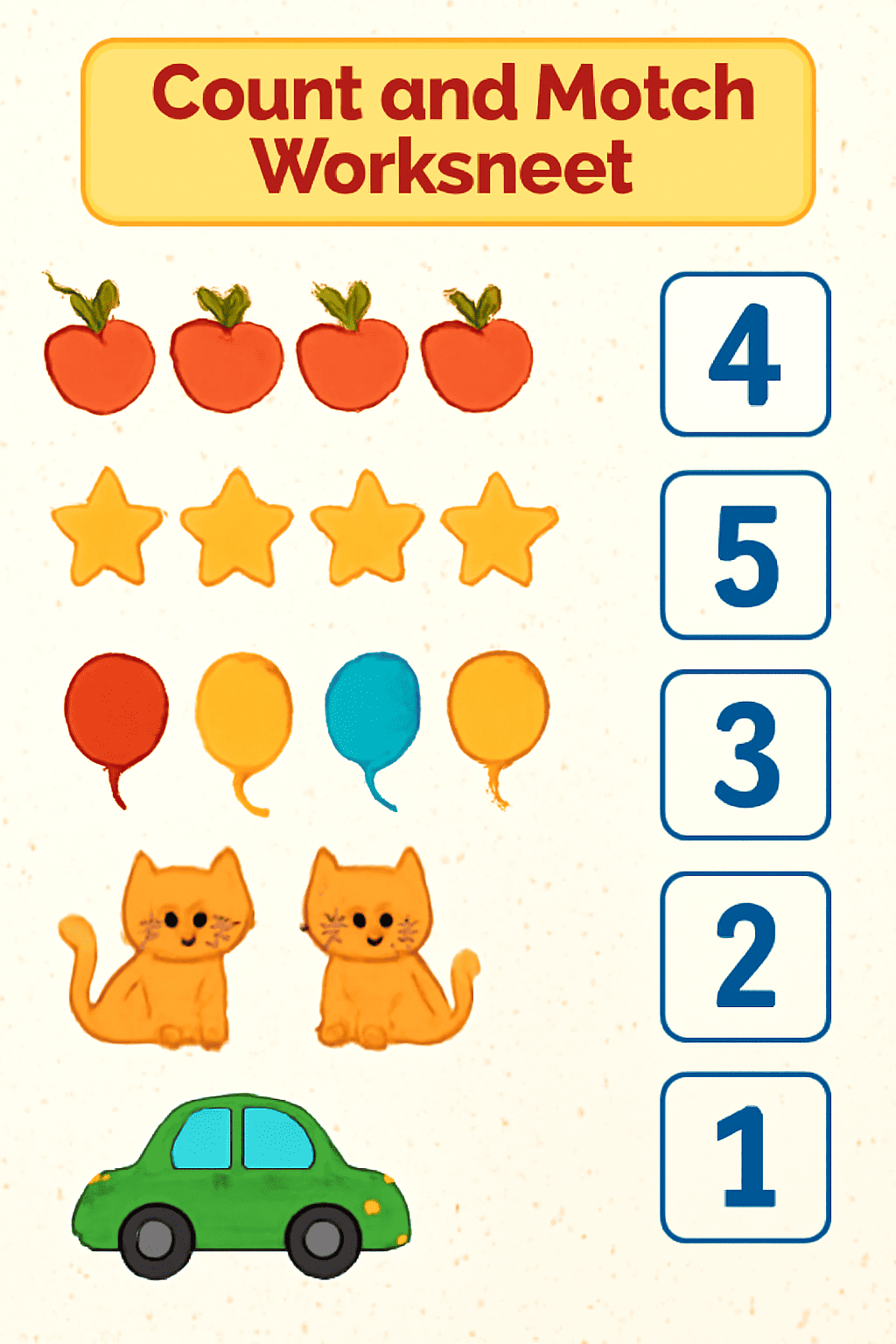
| 🎯 Learning Objective | Practice one-to-one correspondence — matching a written number to the correct quantity of objects, one of the foundational skills for real counting |
| 📊 Difficulty | Beginner — assumes rote counting to 10 (saying the numbers in order), not full number-quantity understanding yet |
| 👶 Best For | Ages 3–5, preschool and pre-kindergarten |
| ⏱️ Estimated Time | 10–15 minutes |
| 🖊️ Materials Needed | Printed worksheet, pencil or crayon |
👩🏫 Teacher Instructions
In the Classroom
Before handing out the sheet, do one row together as a group — point to each object one at a time while counting out loud, emphasizing that each object gets exactly one count (this "one object, one number word" habit is the actual skill being built, not just reciting numbers). Watch for children who count quickly without pointing, since that often means they're reciting the number sequence from memory without truly matching it to quantity yet.
👨👩👧 Parent Instructions
At Home
Have your child touch each object as they count it out loud rather than counting silently or too quickly — the physical touch-and-count habit is what builds real number sense, more than speed. If a row is tricky, count it together first, then let your child try matching it to the number independently. For more ideas at this stage, see our Age 3 or Age 4 learning hub.
✅ Answer Key
What to Check
Each row on this worksheet shows a group of objects that should be matched to its correct written number, from 1 up through 10 in order down the page. Check that your child matched each group to the number equal to the actual count of objects shown — if a row has 6 apples, it should be matched (or the number written) as 6, not simply counted quickly and guessed. If several matches are off by one, that's a common early sign of "counting too fast without pointing," not a deeper problem — slowing down usually resolves it within a session or two.