➕➖ Addition & Subtraction Worksheet
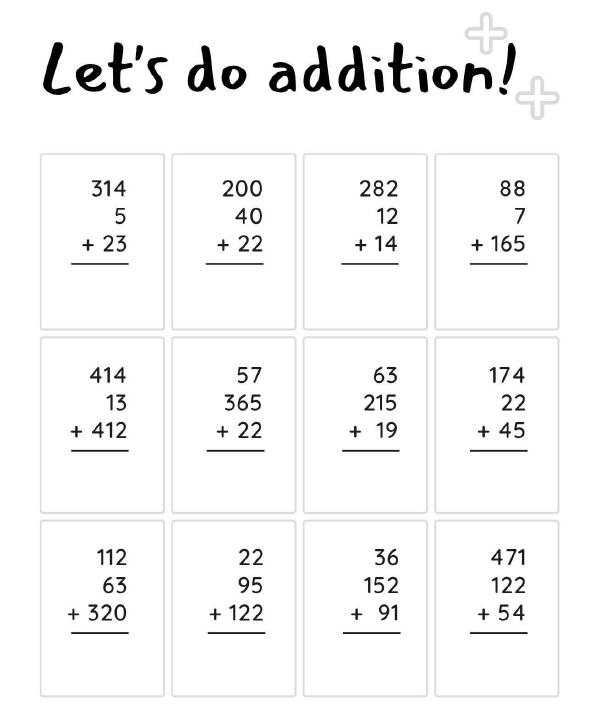
| 🎯 Learning Objective | Build fluency adding and subtracting within 20, and understand addition and subtraction as opposite (inverse) operations |
| 📊 Difficulty | Intermediate — assumes counting confidently to 20 and basic addition concepts already introduced |
| 👶 Best For | Ages 5–7, kindergarten through first grade |
| ⏱️ Estimated Time | 10–15 minutes |
| 🖊️ Materials Needed | Printed worksheet, pencil, optional counters (buttons, blocks) for problems that feel tricky |
👩🏫 Teacher Instructions
In the Classroom
Before independent work, solve one addition and one subtraction problem together on the board, thinking out loud ("I have 8, I need 3 more, so I count up: 9, 10, 11"). Encourage students who find a problem hard to use counters or draw simple tally marks rather than guessing — the goal at this stage is accurate strategy use, not pure mental math speed, which comes later with practice.
👨👩👧 Parent Instructions
At Home
If your child gets stuck, physical objects (buttons, dry pasta, coins) make the problem concrete again — this isn't a step backward, it's exactly how the concept was likely first taught in class. Point out the connection between addition and subtraction when it comes up ("if 5 + 3 = 8, then 8 - 3 must be 5") since noticing that relationship is often more valuable than memorizing each fact in isolation. Our multiplication strategies guide covers the next stage once addition and subtraction feel solid.
✅ Answer Key & Self-Checking Strategy
How to Check Without a Printed Key
Since the specific problems vary across worksheet printings, here's a reliable way to check any addition or subtraction answer without needing a separate key:
- For addition: The answer should always be larger than both numbers being added (if not, something's off).
- For subtraction: Add the answer back to the number being subtracted — it should equal the original number (e.g., if 9 - 4 = 5, check that 5 + 4 = 9).
- Quick estimate check: Round each number to the nearest 5 or 10 first and do the easier version in your head — if the worksheet answer is wildly different from that estimate, double-check the work.
This "check by reversing the operation" habit is worth teaching directly — it's the same self-checking skill used in much more advanced math later on.