🍎 Fruits Coloring and Learning Worksheet
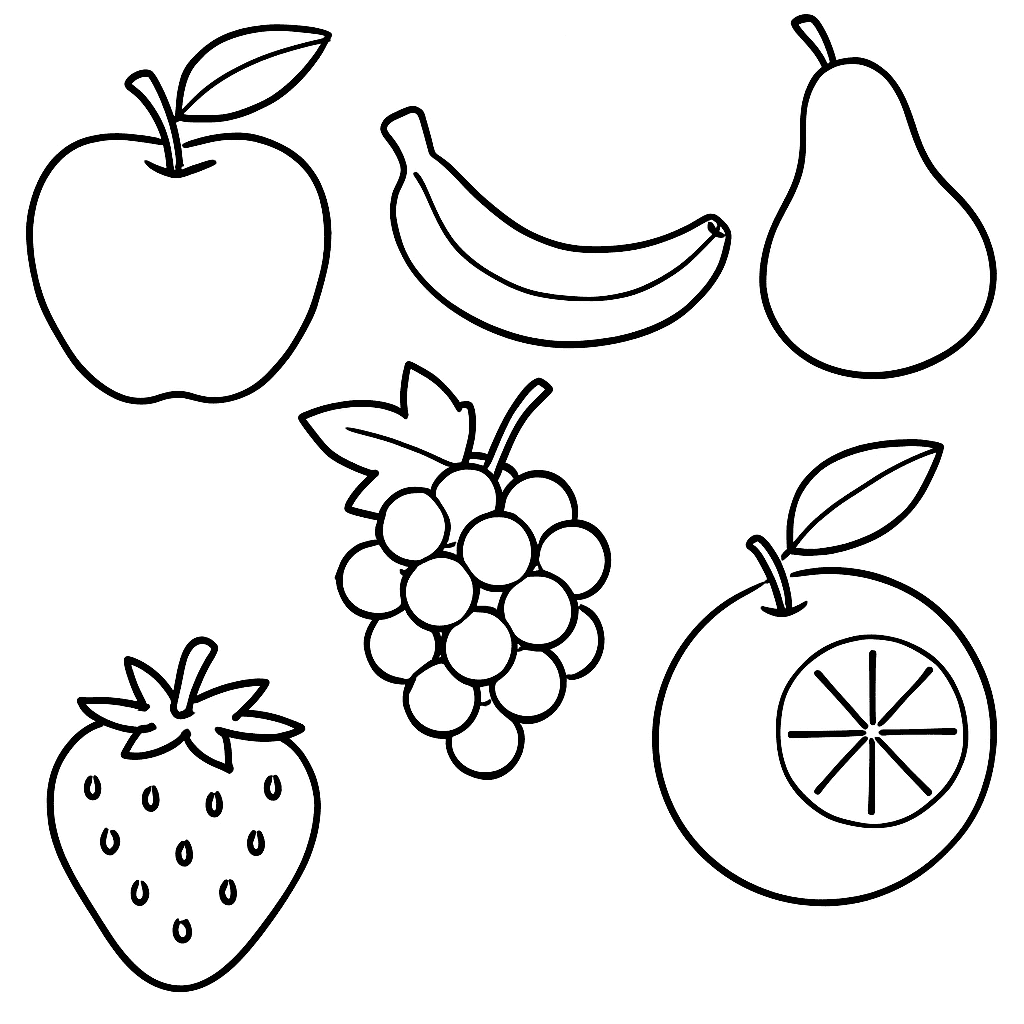
| 🎯 Learning Objective | Build fruit vocabulary and real-world color association while practicing pencil control through coloring |
| 📊 Difficulty | Beginner — no prior reading or writing needed |
| 👶 Best For | Ages 2–5, toddler through preschool |
| ⏱️ Estimated Time | 10–15 minutes |
| 🖊️ Materials Needed | Printed worksheet, crayons or colored pencils |
👩🏫 Teacher Instructions
In the Classroom
Before handing out the sheet, ask students to name each fruit pictured and describe its real color from memory — this turns a coloring activity into a genuine vocabulary and recall exercise rather than pure busywork. If real fruit or fruit pictures are available, a quick side-by-side comparison reinforces that the coloring choice should match reality, not just personal preference.
👨👩👧 Parent Instructions
At Home
Talk through each fruit as your child colors it — "bananas are yellow, what color should we use?" — turning a quiet activity into a conversation. This pairs naturally with a trip to the kitchen or grocery store, where the same fruits can be pointed out in real life. See Fruits Learning Pages for more vocabulary-building content on this topic.
✅ What Successful Completion Looks Like
Not a Traditional "Answer Key"
There's no strict right-or-wrong color choice enforced here, but a useful informal check: does the coloring roughly match the fruit's real-world color (yellow bananas, red or green apples)? That match is a sign the vocabulary connection is landing, not just the motor activity. Coloring outside the lines is entirely normal at this age and isn't something to correct directly.